A better brief starts with the problem.
You do not need a forty-page document. You do need a shared understanding of what should change.
 By Mubarak Bello · No-Code DevUpdated
 Describe the friction
You do not need to arrive at our first conversation with a polished brief. I would rather hear one precise problem than read ten pages of design preferences: “Our marketing team cannot publish a landing page without asking a developer” gives us somewhere useful to start. The brief should turn that problem into a shared decision about what to change.
Turn a publishing problem into a build brief
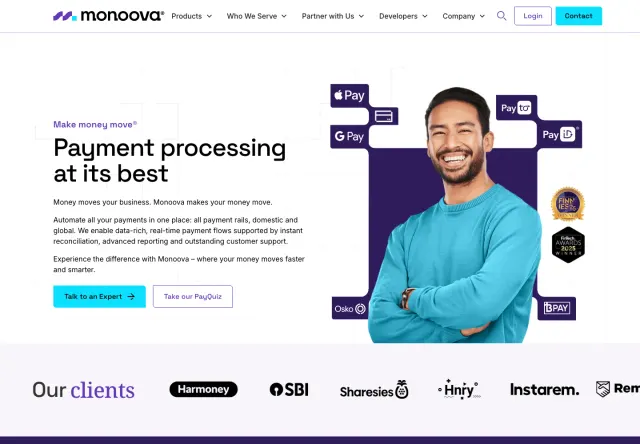
Monoova’s case study connects a business need—marketing ownership of routine publishing—with a specific development contribution: reusable sections, CMS collections, and templates. That is the level of clarity I look for in a brief. A visual reference can describe a direction; it cannot tell me which task your team needs to own after launch.
Complete this sentence: “When we need to ___, we currently have to ___; the new website should let ___ do it.” Bring that to the first call.
Name the next step for visitors
Choose the action that matters on each important page: book a conversation, explore a product, request a demo, or read a case study. That helps us assess the structure and the content instead of judging the design in isolation.
Be honest about what is ready
Brand assets, content, stakeholder availability, and system access all influence the schedule. An incomplete brief is workable. An invisible dependency is harder to plan around.
Choose one route for feedback
Nominate someone to combine feedback and resolve conflicting requests. Specific comments tied to the agreed goals are more useful than several disconnected opinions about how a page should feel.
Five things to bring to the first call
- What is not working today.
- Who the site needs to serve.
- The pages or actions that matter most.
- Your timing, budget, and dependencies.
- Who will maintain the website after launch.
Working through this on your site?
Bring your questions. We’ll help you find a useful next step.