How to choose a Webflow partner beyond the portfolio
Questions that help founders and agencies compare scope, communication, ownership, quality checks, and the handover after launch.
 By Mubarak Bello · No-Code DevUpdated
 Look for evidence of how the work gets done
If you are considering me for a project, I want you to ask about the work behind the screenshots. What did I own? What did the client or agency provide? How will your team take over? A portfolio starts the conversation, but the answers to those questions tell you more about whether we can work well together. They are the same questions I suggest using with any development partner.
Ask me to separate the roles
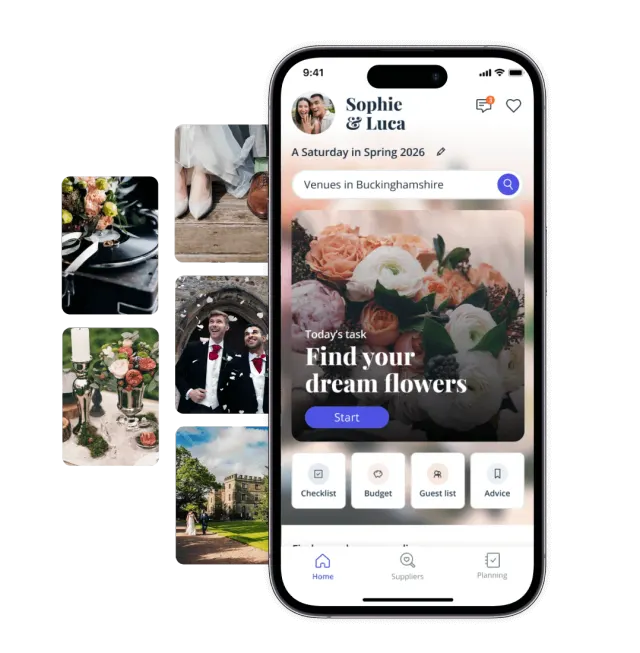
Bridebook is a Webflow marketing-page development engagement in my portfolio. The contribution described is to the public-facing website, not ownership of the wedding-planning application. That boundary is useful when you compare partners: a specialist who can explain their contribution clearly gives you a better basis for a scope discussion than a broad claim to have built everything.
Choose one relevant example and ask: “Who handled design, development, content, integrations, and launch—and which of those would you own for us?”
Ask what they actually owned
For one relevant project, ask who handled strategy, copy, design, development, integrations, and launch. A development specialist working from an agency’s approved design can be an excellent fit for your build. A studio leading the whole website may be better when your direction is unresolved. Neither arrangement is inherently stronger. What matters is a clear match between the role you need and the work the partner can demonstrate. Treat vague claims of doing everything as a reason to ask more specific questions.
Review a journey, not just a screenshot
Open a live example on your phone. Try navigation, a long page, a form, and a case study. Ask what the partner checked before launch and what has changed since their involvement. Motion should support the content and offer an appropriate reduced-motion experience. Forms should handle errors and explain what happens next. These observations are prompts for discussion, not a complete technical audit. A current defect might come from later changes, so give the partner room to explain the history.
Ask to see how an ordinary update works
If your marketing team will maintain the website, request a walkthrough of a representative editing task. That could be publishing a case study, adding a product update, or creating a campaign page from existing sections. Watch for clear labels and predictable boundaries between content and layout. Ask what your team can change safely and what still needs specialist work. Training should be tied to those actual tasks. A collection of recordings is useful only if it answers the questions your editors will face.
Compare proposals against the same brief
Send shortlisted partners the same goals, page list, existing assets, integrations, and timing constraints. Ask them to identify assumptions and missing information. Compare deliverables, exclusions, review arrangements, and post-launch support alongside the price. A cheaper quote may leave copy, migration, or testing to your team; a larger quote may cover work you do not need. The best next conversation is about the differences. It is much harder to compare proposals when each provider has been asked to solve a different problem.
Agree a working rhythm you can maintain
Ask how progress is shared, where feedback belongs, and who resolves conflicting comments. A working preview with clear review points can be more useful than frequent updates that require no decision. Your side also needs an owner who can gather feedback and approve it. For agency engagements, agree whether communication is white-label, who speaks to the end client, and what happens when their scope changes. These arrangements are part of delivery, even though they will never appear in a portfolio screenshot.
Keep ownership and access explicit
Decide who owns the domain, Webflow Workspace, billing, analytics, and connected services. Webflow documents guest collaboration that lets clients retain Workspace ownership while inviting an eligible agency or freelancer; check the current plan and role requirements for your arrangement. Use account invitations and appropriate permissions instead of shared passwords. Ask how access will be handed over or removed at the end. You should understand how the website continues operating if you later work with someone else.
Make quality checks concrete
“Fully tested” is hard to evaluate without a scope. Ask which browsers and screen sizes are checked, how forms are verified, and whether migration includes old-to-new URL testing. Agree who reviews content, image descriptions, metadata, and integrations. A partner should be able to explain which checks they perform and which depend on a third-party account or your approval. Also ask how unresolved items are recorded. A short, honest launch list is more useful than a broad promise that hides outstanding decisions.
Distinguish support from a new request
Discuss the period after launch before signing. What counts as a fix to the agreed delivery? What happens if your team asks for a new landing page or changes a connected service? At No-Code Dev, new builds include 30 days of fixes for the delivered scope; additional pages, features, and content are scoped separately. Ongoing care has an agreed workload. Whatever arrangement you choose, get the boundaries and the method for requesting work into the proposal, where both sides can refer to them.
Five questions worth taking to your next call
- Which part of a comparable project did you deliver personally, and who handled the rest?
- What would you need from us before you could commit to a scope and schedule?
- Can you show how our team would complete a common publishing task?
- Who owns the accounts, and what will we receive at handover?
- How do you verify launch readiness and handle requests afterwards?
Choose clarity you can work with
A suitable partner should help you understand the decisions, not make the project feel more mysterious. Look for specific answers, relevant work, realistic boundaries, and a process your team can participate in. If you have approved designs, share them with No-Code Dev for a development scope. If the direction is still taking shape, start with the website goals and the problems you want it to solve.
Sources & further reading
Working through this on your site?
Bring your questions. We’ll help you find a useful next step.